Safety Is Also About What People Get Right
Recognize useful contributions, care and follow-through without making employees reluctant to report problems.

Levi Blount, MS, CSP, SMP
Founder & CEO, ASIP Technologies, Inc.2 min read
If employees only hear from the safety team when something has gone wrong, what message are we sending?
Someone helps a new starter understand a task. A crew pauses to clarify an instruction. An employee raises an awkward concern because they care about what happens next.
Those contributions deserve attention.
Recognize the contribution specifically
“Good job” is welcome. A specific thank-you explains what mattered.
Consider a hypothetical warehouse employee who notices that a delivery will obstruct an access route. They raise the concern early and help the supervisor agree a different staging arrangement.
Recognition can acknowledge the observation, the clear communication and the practical follow-through. It does not need an invented claim that an injury was prevented.
The same principle applies to a colleague who identifies an equipment defect, asks a useful question during a briefing or helps someone find the correct procedure.
Protect the freedom to report
A reward can send the wrong message if employees believe reporting an injury will cost the team something.
OSHA's 2018 clarification supports participation-based incentives, including hazard identification, and explains that incentive programs must not discourage injury reporting. It does not prohibit every rate-based program.
ASIP's approach is to recognize positive contributions. Reporting an injury should never cost someone recognition. We do not recommend organizing the conversation around “days since the last incident.”
People need to be able to tell you something went wrong without feeling they have let the team down by telling the truth.
Make good work visible fairly
Look beyond the employees a manager sees during the day. Include night shifts, remote locations, temporary staff and people whose contribution is helping someone else succeed.
Keep participation practical. A complicated nomination can hide worthwhile contributions. A demand for large numbers of observations can encourage weak submissions.
Respect people's preferences about public acknowledgment, and avoid exposing personal information from an investigation.
Support the human thank-you
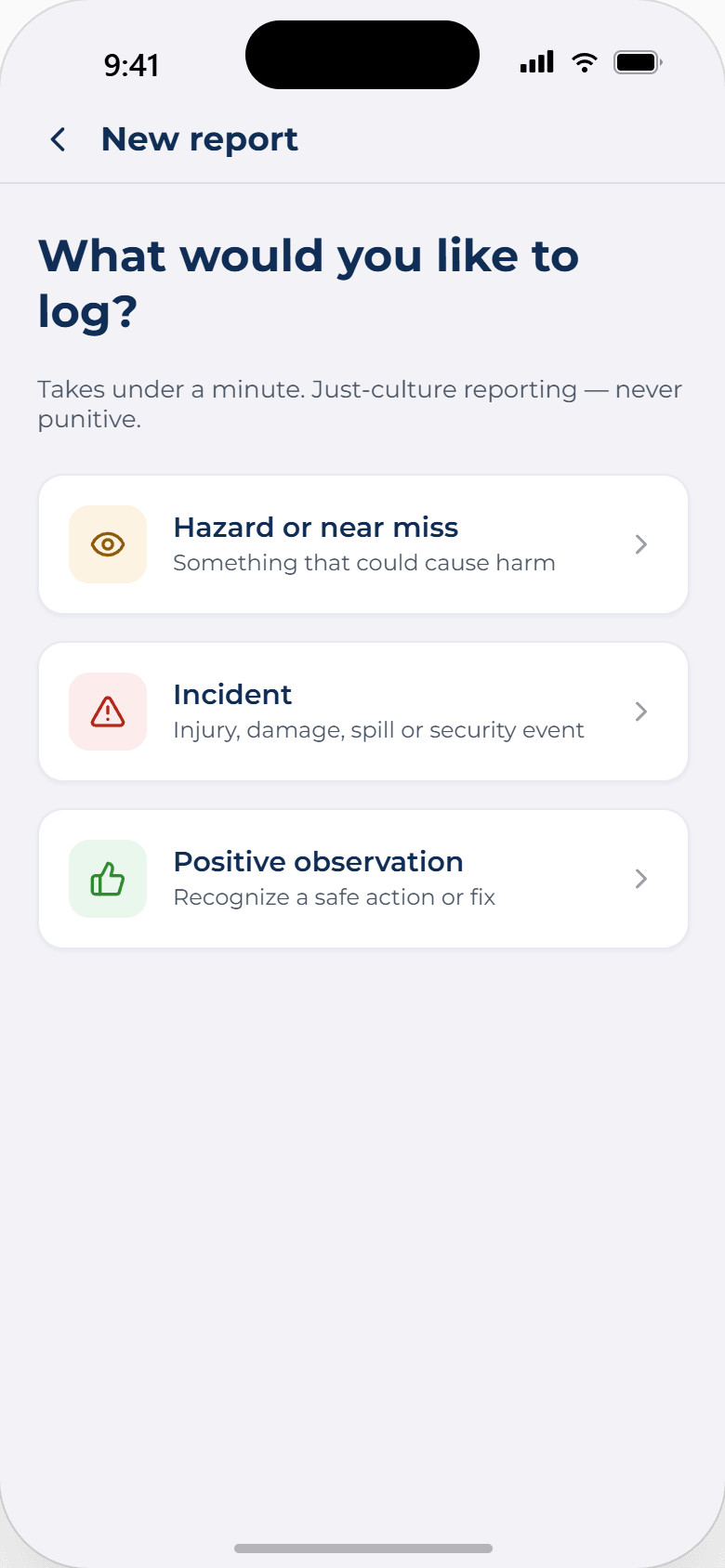
ASIP includes recognition alongside reporting, inspections and corrective actions. Availability depends on company configuration. The record can help explain a contribution and share useful learning; a supervisor should still make time to say thank you.
There is another management question: have we given people the resources to repeat the good practice? Praising a workaround should not become an excuse to leave the underlying problem unresolved.
At your next team meeting, ask: “What did someone do this week that made the work better for somebody else?”
Listen for the details. Explain why the contribution mattered. Then consider what the rest of the team could learn from it.