Airports · Airlines · Ground handlers · FBOs
One system for aviation safety and operational work.
ASIP brings reports, equipment checks, training records, risk assessments and corrective actions into the system your people use every day. AI assistance helps them find relevant information, prepare the next action and understand the evidence behind a concern.
Start with your operation. See what ASIP can replace, what your teams will do differently and what it is likely to cost.
An illustrative workflow, not a customer result
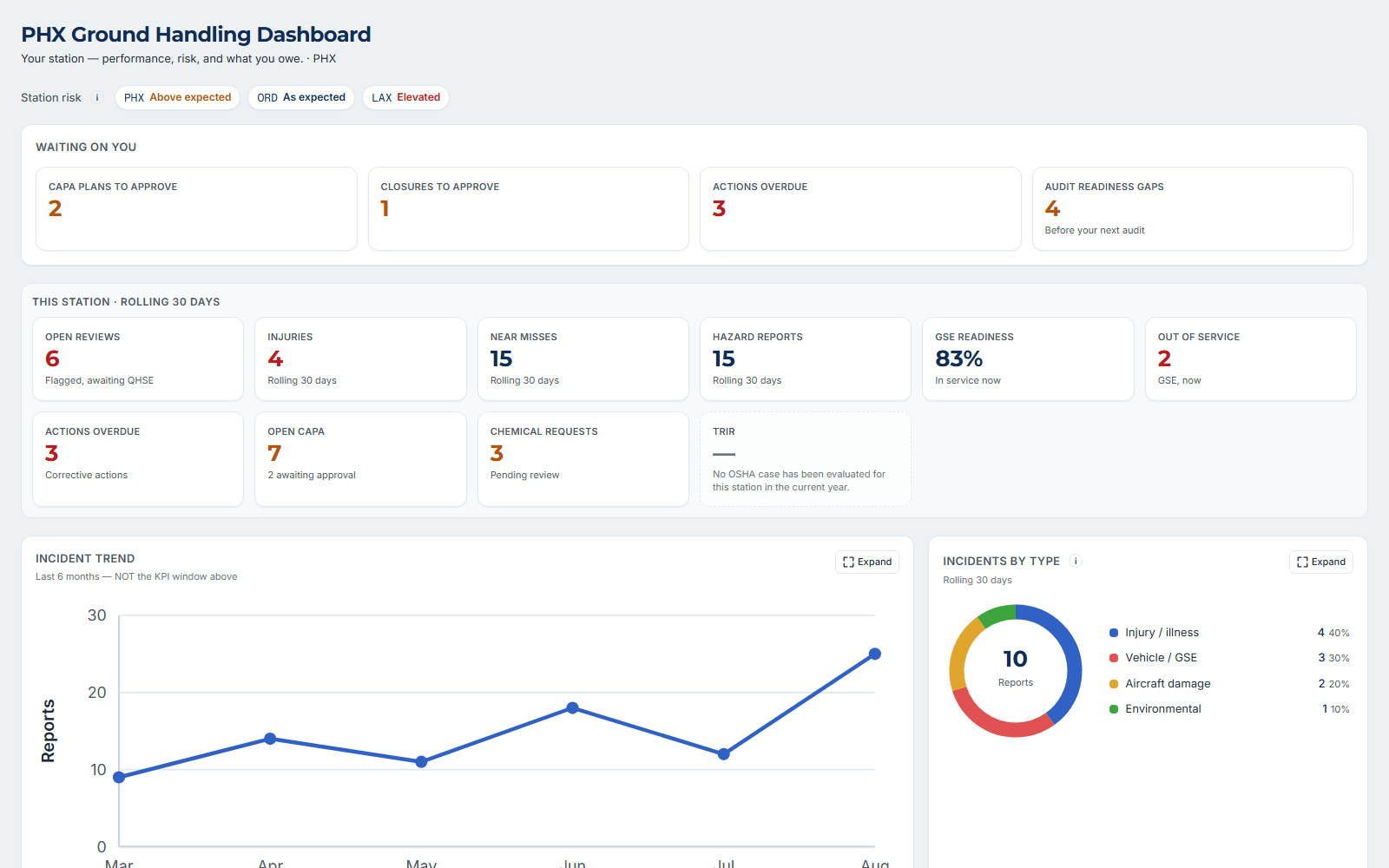
From the first observation to the next decision
Do the work once.
Record equipment checks, hazards, applicable training evidence and inspection findings in the same operating context.
Follow the concern through.
Give authorized managers the records needed to investigate, assign actions and verify the response.
Lead with the evidence.
Review scoped station and network records, find the underlying information and decide where support is needed.
Less administration at the station. Better-informed decisions across the business.
A concern raised on the ramp should reach the person who can act on it. An equipment defect should stay with the asset. An audit finding should lead to an owned action and evidence of what changed.
ASIP keeps those workflows and their context together, with access appropriate to each person's responsibility. Leaders can review authorized records across the locations they oversee instead of repeatedly asking stations to rebuild the picture.
AI should help people do the next useful thing.
The more relevant work you carry out in ASIP, the richer the operating context available for assistance. People still review evidence, make decisions and verify that actions worked.
Explore the capabilities demonstrated for your operation, including clear labels for work still in development.
Replace covered work, not your responsibilities
- Evaluate replacing
- Covered reporting, inspection, training-record and action-tracking workflows, accepted against the operator's actual requirements. SDS and US OSHA recordkeeping workflows only where their specific scope, entitlement and readiness are verified.
- Keep specialist authority
- Flight operations, flight-data monitoring, specialist fuel systems and licensed training or standards outside demonstrated coverage. Accountable people, regulators and specialist service providers retain their decisions.
- Current readiness and limits
- Available scope differs by program. Full fuel QC and later airport SMS functions remain in development; school dispatch and maintenance are desktop-based and in evaluation. AI assistance must be demonstrated for the intended sources, role and workflow.
Count a retired subscription only after the replacement is accepted and the cost can stop. Measure recovered administrative capacity separately from cash savings, and include migration, retention and overlapping contracts.
What it costs, and what changes it
Choose the actual operation, covered employees and sites. Ground handling, FBO, airline, catering, Fueling and M&O use their published categories. Airports are package-based; flight schools do not yet have a dedicated published basis.
See your priceQuestions before you switch
- What can ASIP replace in an aviation operation?
- Evaluate the reporting, inspection, training-record and corrective-action tools whose work can be demonstrated in ASIP. Keep specialist systems and any workflow that has not passed the replacement assessment.
- Does ASIP replace accountable safety decisions?
- No. AI can help find information, shape a report query and prepare work for review. Authorized people retain operational decisions, risk acceptance and regulatory conclusions.
- How do aviation operators find their price?
- Use the published category for your operation, covered employees and sites. Airports have separate pricing, and flight-school pricing needs an explicitly defined basis rather than an unrelated category.